There are nights when all you want is something warm, creamy, and guaranteed to please. Scalloped potatoes do exactly that without asking too much of you in return. With thinly sliced potatoes and a simple, silky sauce, this recipe delivers comfort with minimal effort.
No fancy equipment, no complicated steps—just straightforward cooking and a delicious, bubbling dish. It’s perfect for family dinners, potlucks, or anytime you want a reliable side that feels special.
Why This Recipe Works
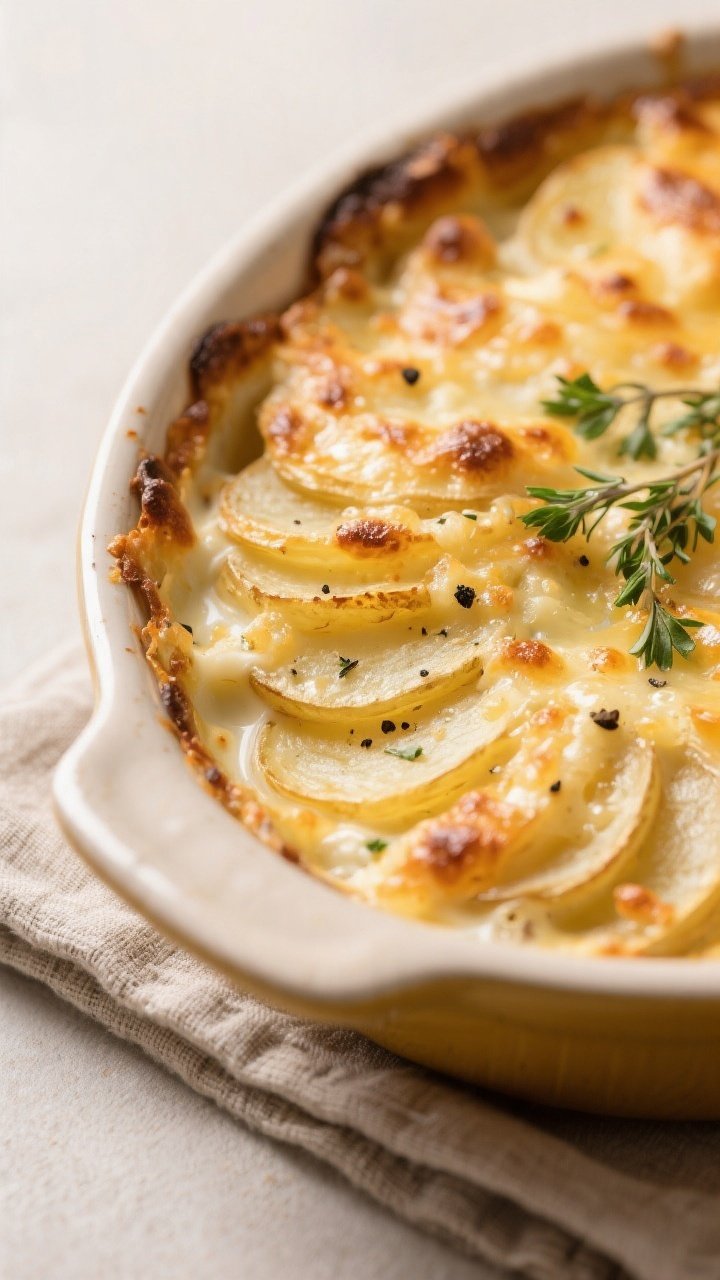
This version keeps things simple while focusing on the essentials: tender potatoes, a smooth creamy sauce, and balanced seasoning. There’s no roux to fuss over, so it’s truly weeknight-friendly.
We use heavy cream and milk for a rich but not overly heavy texture. The potatoes are sliced thin so they bake evenly and turn buttery soft. A little cheese helps the top brown beautifully, while garlic and onion add depth without overpowering the dish.
Shopping List
- Russet or Yukon Gold potatoes (2 to 2.5 pounds), peeled if you prefer
- Heavy cream (1 cup)
- Whole milk (1 cup)
- Unsalted butter (3 tablespoons)
- Garlic (2 cloves), minced
- Yellow onion (1 small), thinly sliced or finely chopped
- Salt and black pepper
- Ground nutmeg (a pinch, optional)
- Thyme (fresh or dried), optional
- Grated cheese (1 cup, optional—Gruyère, cheddar, or Parmesan)
- Fresh parsley or chives for garnish (optional)
- Nonstick cooking spray or extra butter for the baking dish
How to Make It
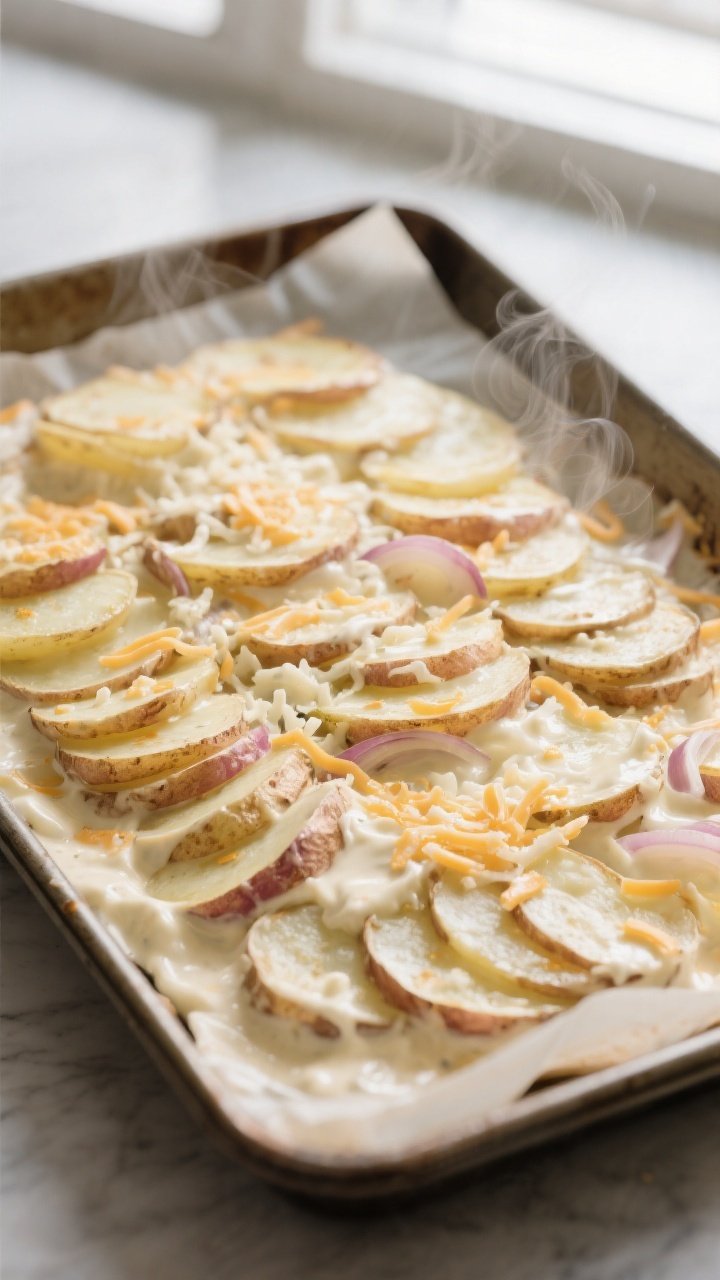
- Preheat and prep: Heat your oven to 375°F (190°C).
Grease a 9×13-inch baking dish with butter or cooking spray.
- Slice the potatoes: Using a sharp knife or mandoline, slice potatoes into 1/8-inch rounds. Keep slices uniform so they cook evenly.
- Sweat the aromatics: In a saucepan, melt the butter over medium heat. Add onion and cook 3–4 minutes until soft.
Stir in garlic for 30 seconds until fragrant.
- Make the cream mixture: Pour in the heavy cream and milk. Add 1 to 1.5 teaspoons salt, 1/2 teaspoon black pepper, and a pinch of nutmeg. Warm gently until steaming, not boiling.
Taste and adjust seasoning.
- Layer the potatoes: Arrange half the potatoes in the baking dish in overlapping layers. Sprinkle with a little salt and pepper. If using thyme, add a small pinch.
- Add sauce and cheese: Spoon half the cream mixture and onions over the potatoes.
If using cheese, scatter 1/2 cup evenly.
- Repeat: Layer the remaining potatoes, top with the rest of the cream mixture, and finish with the remaining cheese.
- Cover and bake: Cover tightly with foil and bake for 35 minutes to steam and soften the potatoes.
- Uncover and finish: Remove the foil and bake another 20–30 minutes, until the top is golden and the potatoes are fork-tender. If the top browns too fast, tent loosely with foil.
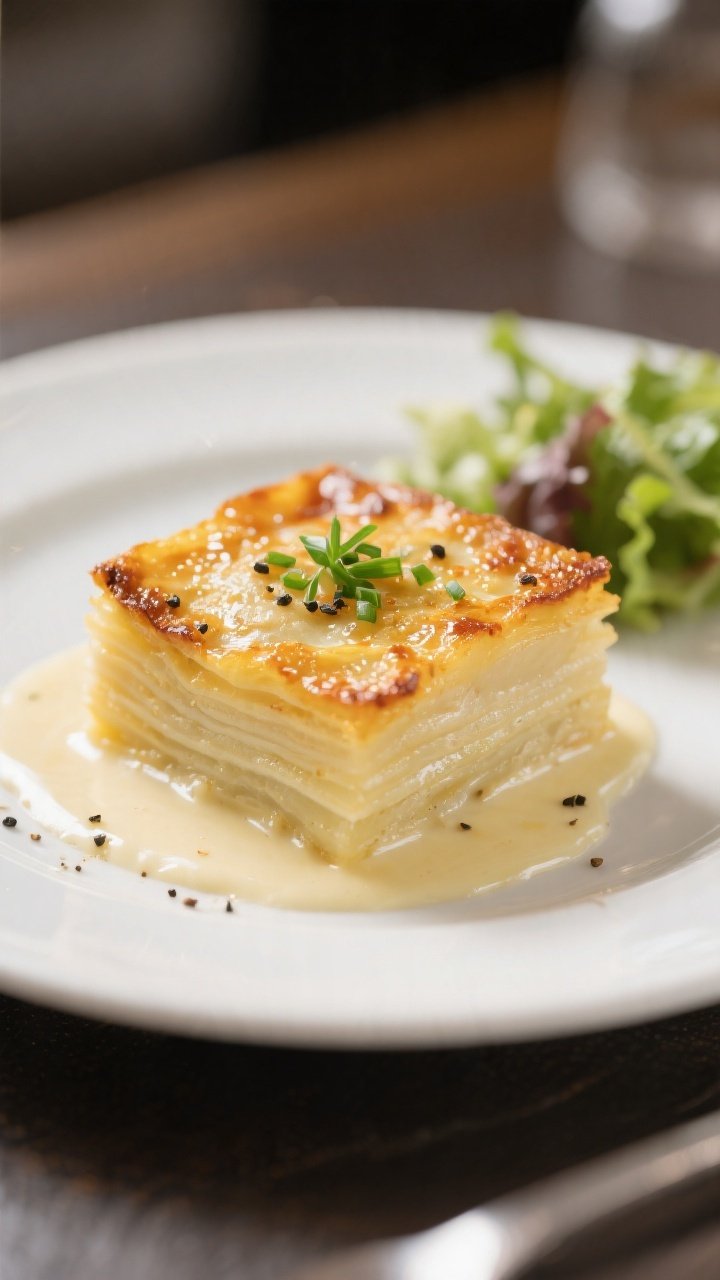
- Rest and serve: Let the dish rest 10–15 minutes so the sauce sets. Garnish with chopped parsley or chives.
Serve warm.
Storage Instructions
- Refrigerator: Cool completely, then cover tightly. Store up to 4 days.
- Reheat: Warm covered in a 325°F (165°C) oven for 20–25 minutes. Add a splash of milk or cream if it seems dry.
Microwave individual portions in 30–45 second bursts.
- Freezer: Freeze baked scalloped potatoes, tightly wrapped, for up to 2 months. Thaw overnight in the fridge, then reheat covered in the oven. Note: Texture may be slightly softer after freezing.
Health Benefits
Potatoes offer potassium, which supports healthy blood pressure, and vitamin C, which helps the immune system.
They’re also a source of fiber, especially if you leave the skins on. Dairy brings calcium and protein, making this dish satisfying. If you want to lighten things up, you can swap part of the cream with milk and use a smaller amount of cheese without losing flavor.
Pitfalls to Watch Out For
- Uneven slicing: Thick slices stay firm while thin ones turn mushy.
Keep them uniform and about 1/8 inch thick.
- Underseasoning: Potatoes need enough salt to shine. Season the cream mixture and taste before assembling.
- Boiling the cream: High heat can cause curdling. Warm gently until just steaming.
- Skipping the rest: If you serve immediately, the sauce can seem runny.
Resting helps it thicken and set.
- Dry top: If the top browns before the potatoes are tender, tent with foil and keep baking.
Variations You Can Try
- Classic au gratin: Add more cheese between layers and top with extra cheddar or Gruyère for a richer, cheesier finish.
- Herb and garlic: Stir fresh thyme, rosemary, or chives into the cream. Add a crushed garlic clove for a deeper aroma.
- Smoky bacon: Cook chopped bacon until crisp. Layer the crumbles with the potatoes and use some bacon fat with the butter for the sauce.
- Onion-forward: Use caramelized onions instead of raw for a sweet, savory twist.
- Lighter version: Use 2 cups of 2% milk and 1 tablespoon butter.
Thicken the milk slightly by simmering a few minutes longer, or add 1 tablespoon cornstarch whisked with cold milk before heating.
- Veggie boost: Add thin-sliced leeks, fennel, or spinach between layers. Keep slices thin so everything cooks through.
- Cheese swap: Try smoked Gouda, fontina, or Parmesan for different flavor profiles.
- Garlic-Parmesan crust: Mix 1/3 cup breadcrumbs with 2 tablespoons Parmesan and 1 tablespoon olive oil. Sprinkle on top for a crisp finish.
FAQ
Can I make scalloped potatoes ahead of time?
Yes.
Assemble and bake fully up to a day in advance. Cool, cover, and refrigerate. Reheat covered at 325°F until hot, adding a splash of milk if needed.
The rest time also deepens the flavor.
What are the best potatoes to use?
Russet and Yukon Gold both work well. Russets become very tender and soak up sauce, while Yukons hold their shape and give a creamier bite. Avoid waxy potatoes like reds if you want that classic soft texture.
Do I have to peel the potatoes?
No.
Leaving the skins on adds fiber and a rustic look. Just scrub well. If you prefer a smoother, more classic presentation, peel them.
Why did my sauce curdle?
Usually it’s from boiling the dairy or too much direct high heat.
Keep the cream mixture just below a simmer and bake covered for the first part of cooking. Using whole milk and cream also helps stability.
How do I know when it’s done?
Insert a knife into the center; it should slide in easily with little resistance. The top should be bubbling and lightly golden.
If the potatoes are still firm, cover and bake another 10–15 minutes.
Can I make it without cheese?
Absolutely. Traditional scalloped potatoes often skip cheese. The creamy sauce and aromatics carry the dish just fine.
If you want a browned top, broil briefly at the end, watching closely.
What can I serve with scalloped potatoes?
They pair well with roasted chicken, baked ham, seared pork chops, or a simple green salad. Add steamed green beans or roasted vegetables for a balanced plate.
Can I use plant-based dairy?
Yes, use a rich, unsweetened plant milk (like cashew or oat) plus a splash of plant cream. Add 1 tablespoon cornstarch mixed with cold plant milk to help thicken.
Vegan butter and dairy-free cheese can be swapped in if desired.
How do I prevent a watery dish?
Use starchy potatoes, slice evenly, and avoid rinsing the slices so the natural starch helps thicken the sauce. Bake covered first, then uncover to reduce and brown.
Is it safe to double the recipe?
Yes, but use a larger or deeper dish and extend the baking time. Check tenderness in the center and tent with foil if the top browns too quickly.
In Conclusion
Easy scalloped potatoes are the kind of comfort food you can count on.
With a short ingredient list and simple steps, you get a dish that’s creamy, tender, and deeply satisfying. Keep the slices thin, season well, and give it time to rest—that’s the whole secret. Whether you keep it classic or add your own twist, this recipe is a reliable favorite for any table.

Leave a Reply